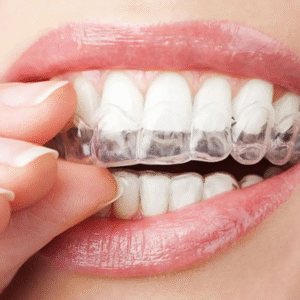
How Soon Do Clear Aligners Start Working? A More Honest Look at the Timeline

There’s a tendency to think of aligner treatment as something that takes time before anything noticeable happens. Patients expect a waiting period. Providers sometimes frame it that way too.
In reality, movement usually begins much earlier. The challenge is that early changes don’t always look the way people expect them to.
Early Movement Is Subtle, but It Sets the Tone for Everything That Follows
Most aligner cases begin showing signs of movement within the first few trays. Not in a dramatic, before-and-after sense, but in small, controlled adjustments. A slight rotation. A bit of spacing that wasn’t there before. Teeth starting to respond to the sequence they’ve been given.
It’s easy to underestimate this phase because the changes feel minimal. But clinically, it’s one of the most important parts of treatment.
This is where the plan meets biology for the first time. Where wear habits start to matter. Where you begin to see whether the case is tracking the way it was designed.
For patients, these early shifts often create reassurance. Something is happening, even if it’s not obvious yet. For providers, it’s an early checkpoint. Not just that movement is occurring, but that it’s occurring in the right way.
And because aligners are built on staged movement, nothing in this phase is random. Each tray is carrying a small portion of the overall plan, building toward something larger. Even when the changes feel quiet, they’re intentional.
Progress Is Continuous, Not Delayed
One of the biggest mindset shifts with aligner therapy is understanding that results don’t arrive all at once.
There isn’t a long stretch where nothing happens followed by a sudden transformation. Movement is incremental. Tray by tray, adjustment by adjustment. The final result is simply the accumulation of those smaller changes.
Patients tend to feel this difference over time. Instead of waiting months to notice progress, they begin to see small updates every few weeks. That steady visibility often makes it easier to stay engaged with treatment.
Consistency becomes more tangible. Wearing the aligners isn’t just a rule to follow, it’s directly connected to what they’re seeing in the mirror.
From a provider perspective, this continuous movement also creates more opportunities to guide the case. Progress can be evaluated in real time, and small adjustments can be made before issues become larger problems.
It changes the experience on both sides. Less waiting. More awareness. A clearer sense that the treatment is moving forward, not just leading somewhere distant.
Predictability Starts Before the First Tray
Early movement isn’t just about how quickly aligners “work.” It’s a reflection of how the case was built from the beginning.
Case selection, digital planning, staging decisions, and workflow consistency all show up early, sometimes within the first few weeks. When those elements are aligned, movement tends to look controlled and predictable. When they’re not, that’s often when tracking issues or mid-course corrections begin.
This is where systems and support matter more than people realize.
With SureSmile®, the emphasis is not just on producing aligners, but on creating a detailed, biologically sound treatment sequence before anything is worn. Digital planning and structured staging allow movements to be sequenced in a way that respects how teeth actually respond over time, rather than forcing change too quickly.
From the outside, aligners can look simple. Clear trays, changed every week or two. But what happens early in treatment is rarely accidental. It reflects how intentionally the case was designed and how consistently it’s being carried out.
When those pieces are in place, early movement tends to feel steady instead of uncertain. Not fast in a dramatic sense, but reliable. And over time, that reliability is what shapes the outcome far more than speed ever could.