How I Prepare for a Speaking Engagement, and What It Means to Stand in the Room

Preparing for a speaking engagement rarely starts at my desk. It usually begins in quieter spaces, in the shower, on a long drive, in moments where my mind has room to think without interruption. That’s where I start organizing the message.
Before I ever open a slide deck, I define the shift I want the room to experience. Every audience is carrying a particular tension: Sometimes it’s confusion around systems. Sometimes it’s overcomplication. Sometimes it’s fatigue from trying to implement ideas that don’t translate into daily practice. My responsibility is to identify that tension clearly and build a message that addresses it directly.
Slides come later; structure follows clarity. If the core message is not defined first, the presentation risks becoming information without direction.
The Room Shapes the Message
Even when I’m teaching similar themes, no two rooms are the same.
The frameworks I use are consistent because they’re grounded in experience. But the tone, depth, and emphasis shift depending on who is in the room and what they need most.
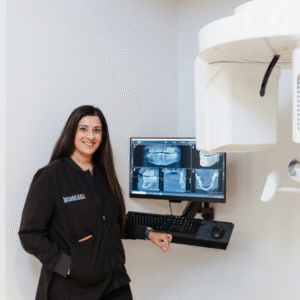
As I prepare to speak at the Dentsply Sirona Academy in Clarkston on aligner mechanics and predictable staging, I’m thinking carefully about the level of technical refinement that room is looking for. The focus there is clarity around IPR decisions, attachment placement, and sequencing. My role in that setting is to simplify complexity and reinforce consistency across providers so the systems feel repeatable and grounded in daily practice.

A few days later in Frankenmuth at the MDAA Spring Seminar, the setting shifts. It’s hands-on. It’s team-centered. We move through same-day digital crown workflows in the morning and aligner attachment placement in the afternoon. That audience includes assistants, hygienists, and dentists working together. The structure has to support collaboration, not just theory.

The theme may overlap, but the environment changes the expression of it.
That’s why I ask detailed questions before finalizing anything. Who’s attending? What roles do they play? What challenges are they navigating daily? What outcome does the host hope their audience walks away with? Once I understand those answers, I can reverse engineer the experience to serve the people in front of me rather than delivering something generic.
Standing in the Room Is a Responsibility
Preparation, for me, is a form of respect.
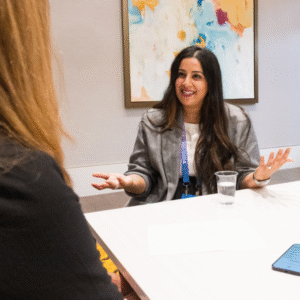
People step away from their practices and patients to attend these events. That deserves intention. I think carefully about the arc of the lecture. Where does it begin? What friction does it acknowledge? Where does it build? Where does it provide practical clarity?
I want what I share to translate to Monday morning. Inspiration without application doesn’t last. If someone leaves energized but unsure how to implement what they heard, I haven’t done my job.
What stays with me most, though, isn’t the presentation itself. It’s what happens after. The questions. The conversations. The moments when someone says they see a system differently or feel more confident bringing something back to their team. Those exchanges are rarely scripted, and they’re often where the real learning happens on both sides.
When I speak about aligner workflows, digital systems, or leadership, I’m not sharing theory. I’m sharing refinements that came from practice, adjustments that took time, lessons that were earned gradually.
If you’re attending in Clarkston or Frankenmuth, I’m genuinely looking forward to being in the room with you. These engagements are never one-directional for me. I learn from the questions you ask and the conversations we have just as much as I hope you gain from the lecture itself. I’m excited to spend that time thinking through these systems together.